
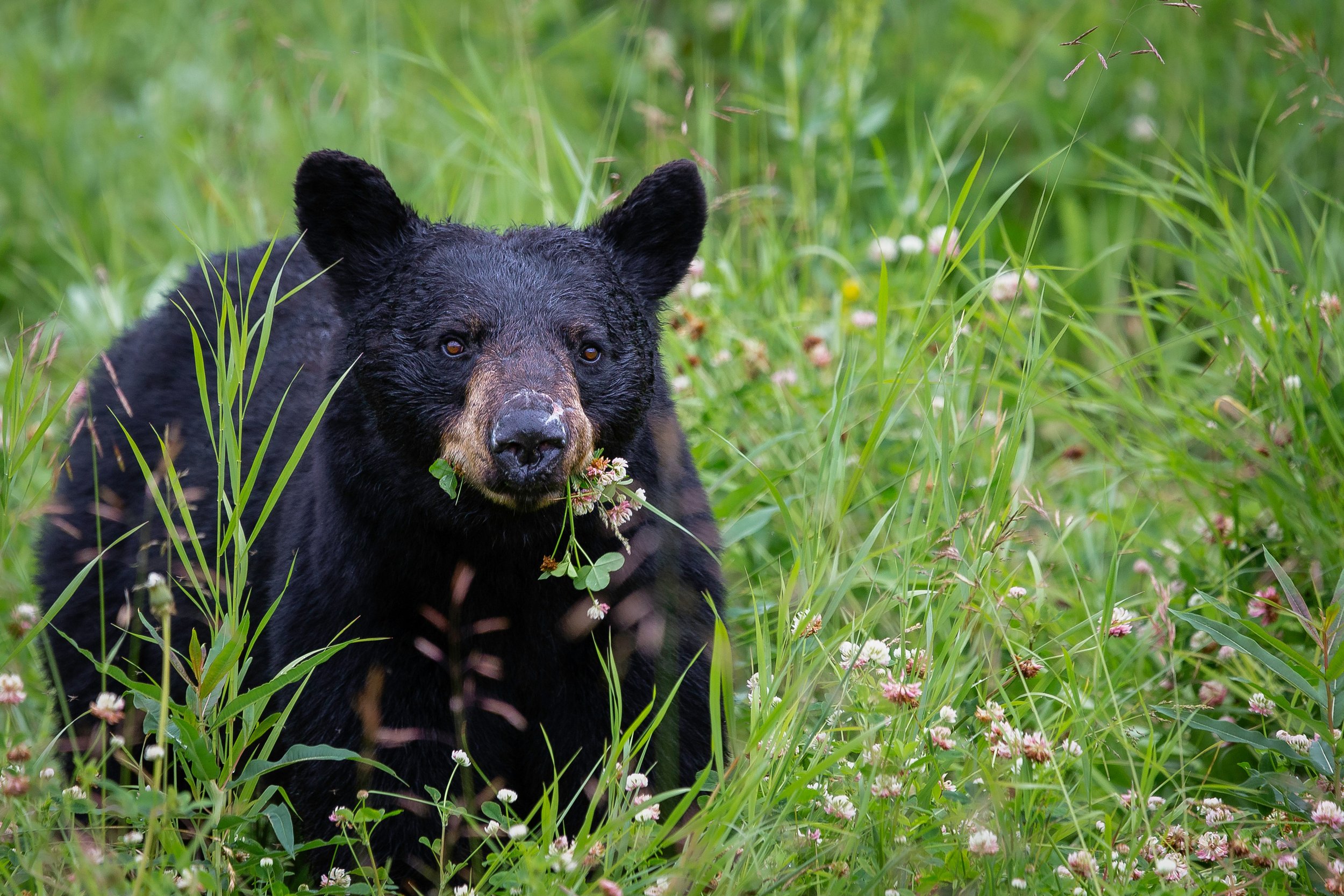
With a $165,000 grant from the National Park Foundation, Friends of Sleeping Bear Dunes is helping the National Lakeshore study the black bear population and protect their future.
By Amy Orzel
Black bears are an iconic part of the Sleeping Bear Dunes landscape. Visitors occasionally spot one crossing a trail, wandering near a campground, or leaving tracks along the dune plateau. But while sightings are becoming more frequent, surprisingly little is known about the bears that call the National Lakeshore home.
How many bears live here? What are they eating? And how might changes to their natural food sources affect their behavior?
Friends of Sleeping Bear Dunes has secured a $165,000 grant from the National Park Foundation to fund a new three-year research project that will help the National Park Service at Sleeping Bear Dunes answer those questions. Answers that the National Park Service managers say will give them a better understanding of bear population, movement patterns, and food preferences and help inform responses to potential increased levels of human-bear conflict.
The project, Coexisting with Black Bears: A Population and Diet Study for Sleeping Bear Dunes, will be the first comprehensive black bear study conducted at the National Lakeshore. Researchers from the University of Wisconsin will work alongside park staff to gather information about the local bear population, including its size, genetic relationships, movement and diet. The three-year study is scheduled to begin collecting field data in spring 2027, with a second collection season in 2028. Researchers will analyze their findings and present management recommendations to park leadership in 2029.
A new approach to wildlife research
One of the most innovative aspects of the study is how researchers will collect the information they need, an approach the National Park Service says has not been used before at Sleeping Bear Dunes National Lakeshore.
Rather than tranquilizing, capturing or placing tracking collars on bears, researchers will use noninvasive hair snares placed in locations where bears are likely to travel. These devices use strands of barbed wire to collect small tufts of hair as bears naturally rub against them. This approach offers a humane, efficient way to gather samples that would otherwise be difficult to get.
The hair follicles contain DNA that researchers can then collect and analyze to identify individual bears, understand genetic relationships and estimate the size of the local population. Additional analysis of the hair will help researchers understand what the bears have been eating.
What's on the menu?
Learning what bears eat in the park is just as important as understanding how many live here. Black bears eat nuts from oak and beech trees, but diseases such as oak wilt and beech leaf disease increasingly threaten these food sources. Researchers want to understand whether bears are changing their diets or traveling farther to find food as their natural food sources decline.
Why does that matter? When natural food becomes harder to find, bears may explore new places in search of food. That can bring them closer to campgrounds, homes, and other places where people gather. Understanding these changes will help park managers make informed decisions about how to protect bears and prevent unwanted interactions with people.
Helping people and bears be good neighbors
While black bear sightings are becoming more common around Sleeping Bear Dunes, aggressive human-bear interactions have not been a problem – and that’s exactly why this research is so important.
The study supports a proactive approach to coexisting with black bears, taking steps now to prevent problems before they begin.
"Black bears are wild animals and we want to make sure they stay that way," says Laura Ann Johnson, executive director of Friends of Sleeping Bear Dunes. "We want to make sure the park and its visitors aren’t encouraging bad habits and behaviors in a way that will cause more harm to them and us in the future."
The research will give park managers a better understanding of where bears are traveling and what may be influencing their behavior. That information can help guide new measures such as improved visitor signage, additional bear-resistant food lockers and garbage receptacles, and educational outreach.
The researchers and park staff involved are looking forward to exploring how the findings can be shared with the communities surrounding the park. Gateway communities are an important part of the Sleeping Bear Dunes experience. Residents, business owners, seasonal employees, and visitors all have a role to play in keeping bears wild. Yet many people may not know the best ways to coexist with them.
With the study's results, the National Park Service hopes to develop educational resources that equip neighboring communities with the knowledge and tools to live responsibly alongside local wildlife.
The National Park Foundation sees an opportunity for this project to reach even further. The research and community education approach could serve as a model for other national parks looking for ways to translate wildlife research into practical guidance for the communities around them.
Helping the Park thrive
For years, Sleeping Bear Dunes National Lakeshore has recognized the need for a more comprehensive understanding of its black bear population. However, the park did not have the funding available to undertake a research project of this scale. National Park Service managers say improved knowledge of black bear population characteristics and diet is the best outcome of this study. Findings from these studies will guide park management conservation decisions to ensure enjoyment of Sleeping Bear for today’s visitors and future generations.
Through private philanthropy, Friends of Sleeping Bear Dunes helps make projects like this possible. As the park’s official nonprofit partner, they provide resources that enable the National Park Service to address the park’s needs and become better stewards of its natural and cultural resources.
"We're doing what we do best, helping the park thrive rather than survive," Johnson says.
The work represents an important investment in the future of Sleeping Bear Dunes: helping visitors and neighboring communities understand the animals that share their landscape and ensuring that the park’s iconic black bears can continue to thrive in their natural habitat.
Your gift to Friends of Sleeping Bear Dunes' Wildlife & Habitat Protection Program supports vital conservation efforts and protects the wildlife that makes this place so special.
Donate today and help protect Sleeping Bear's wild future: https://www.friendsofsleepingbear.org/donate-now