
Shore Guardian: One Volunteer’s Journey Protecting the Great Lakes Piping Plovers
By Angela Josephine
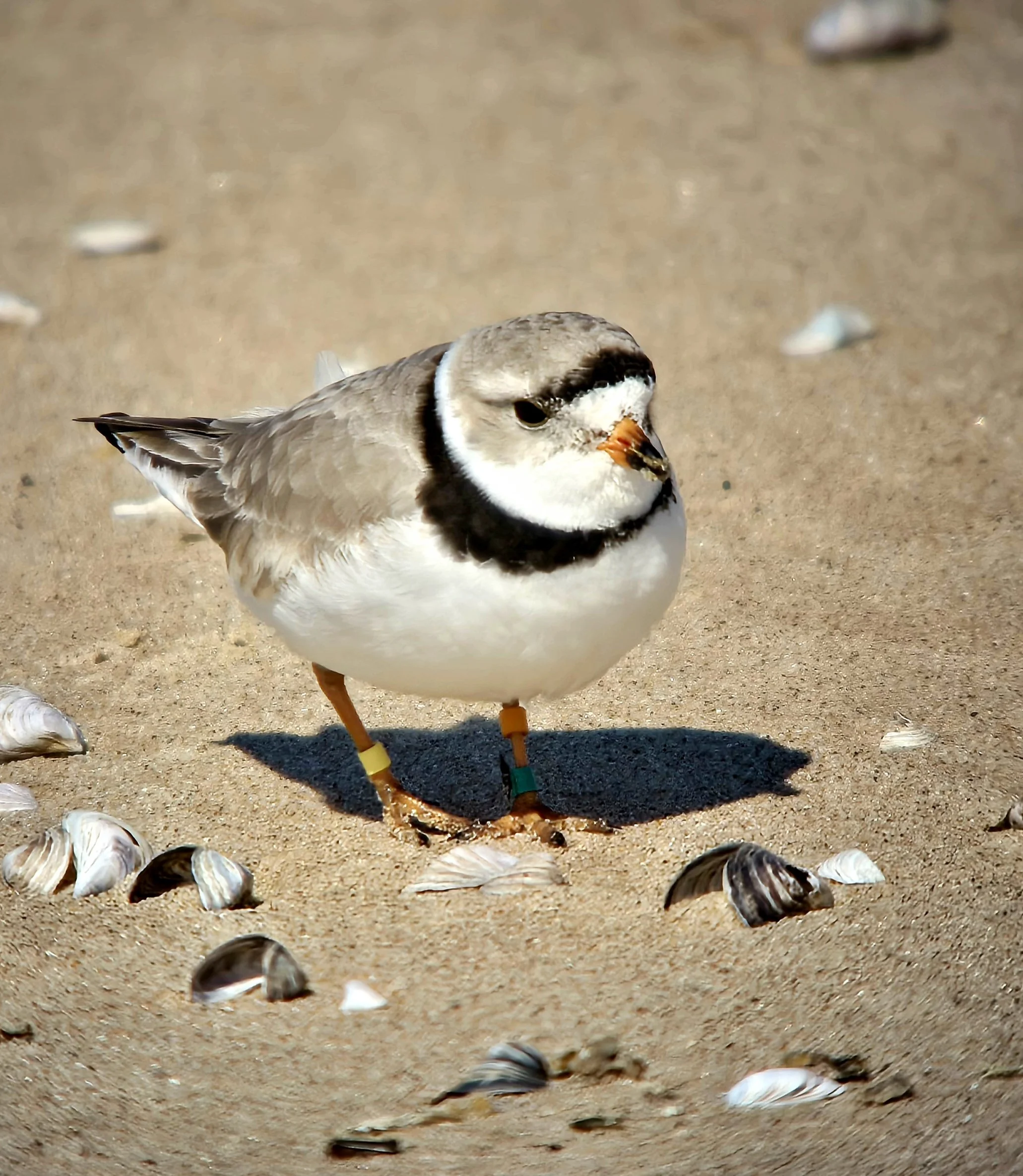
Here is Lake Michigan, chilled from winter's not-so-distant hold and huffed upon by the warm, moist breath of spring. That passionate collision condenses to linger above the waves, pour over the curve of the dunes to be set ablaze by the swift white flame of the sun. Just as quickly it is doused by another great, heaping exhale of vapor. Such stunning contrasts, this paradox of abundance. And there, just through the space that opens in that catch in the breath of it all - a plover!
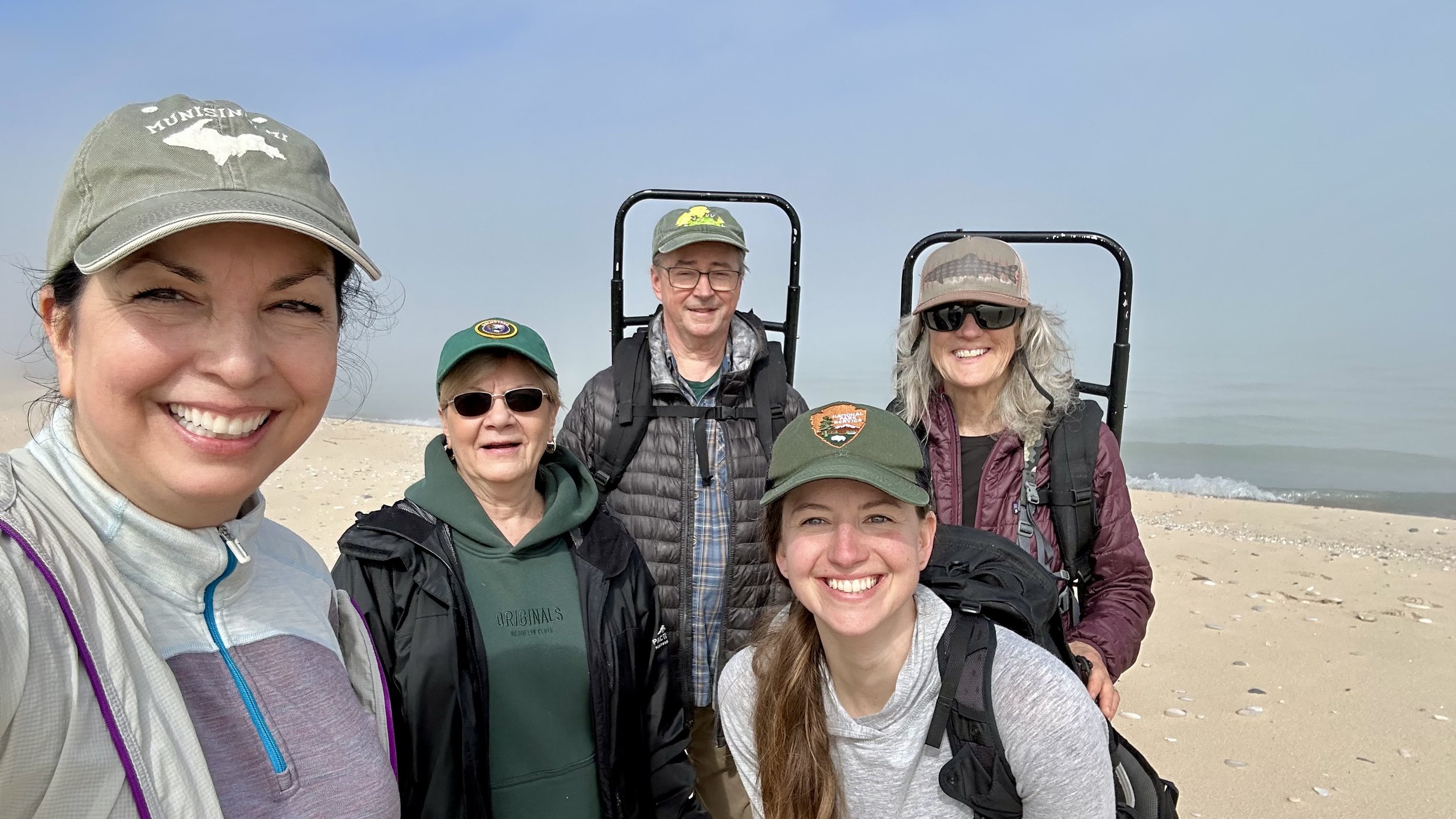
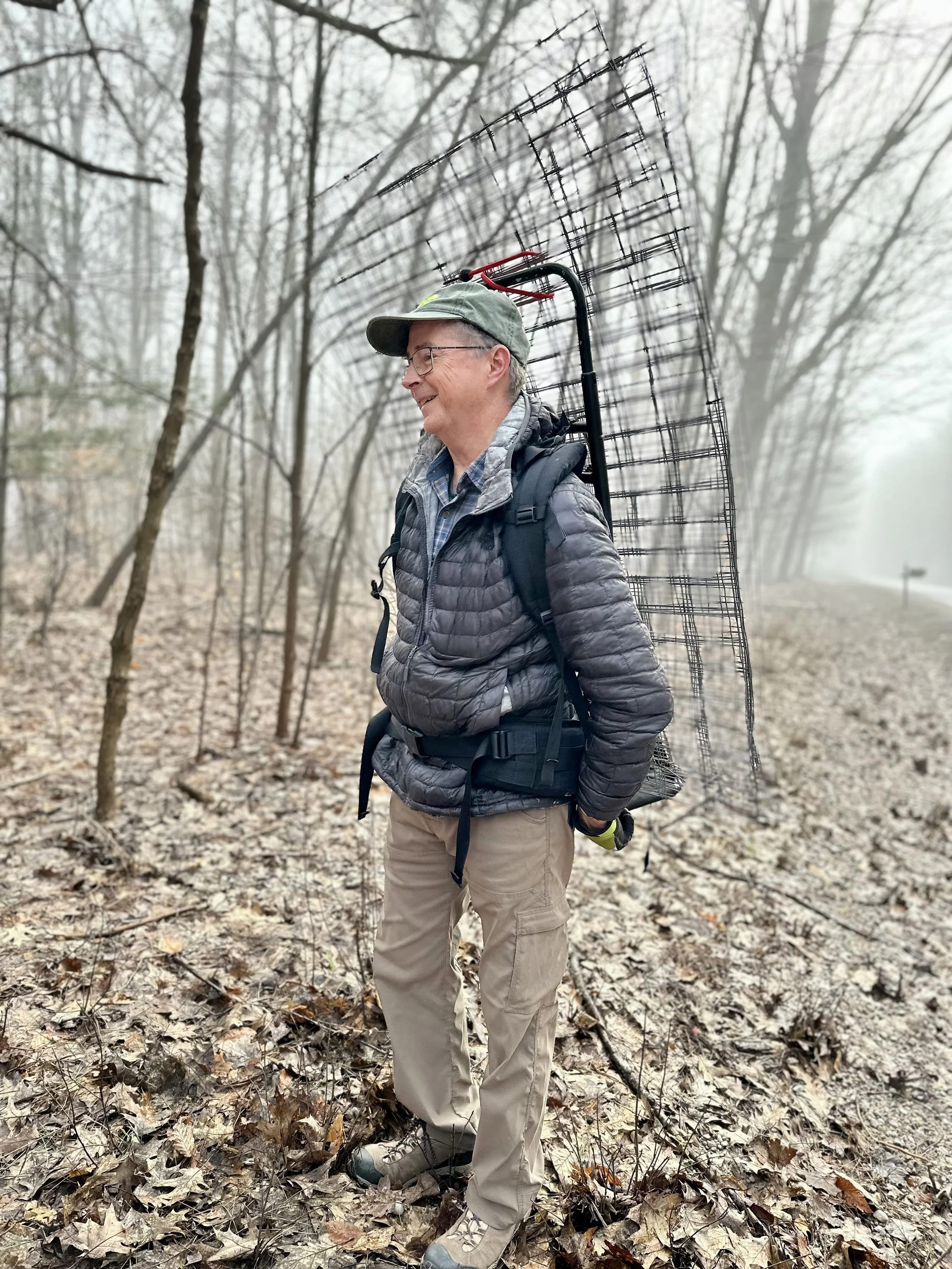
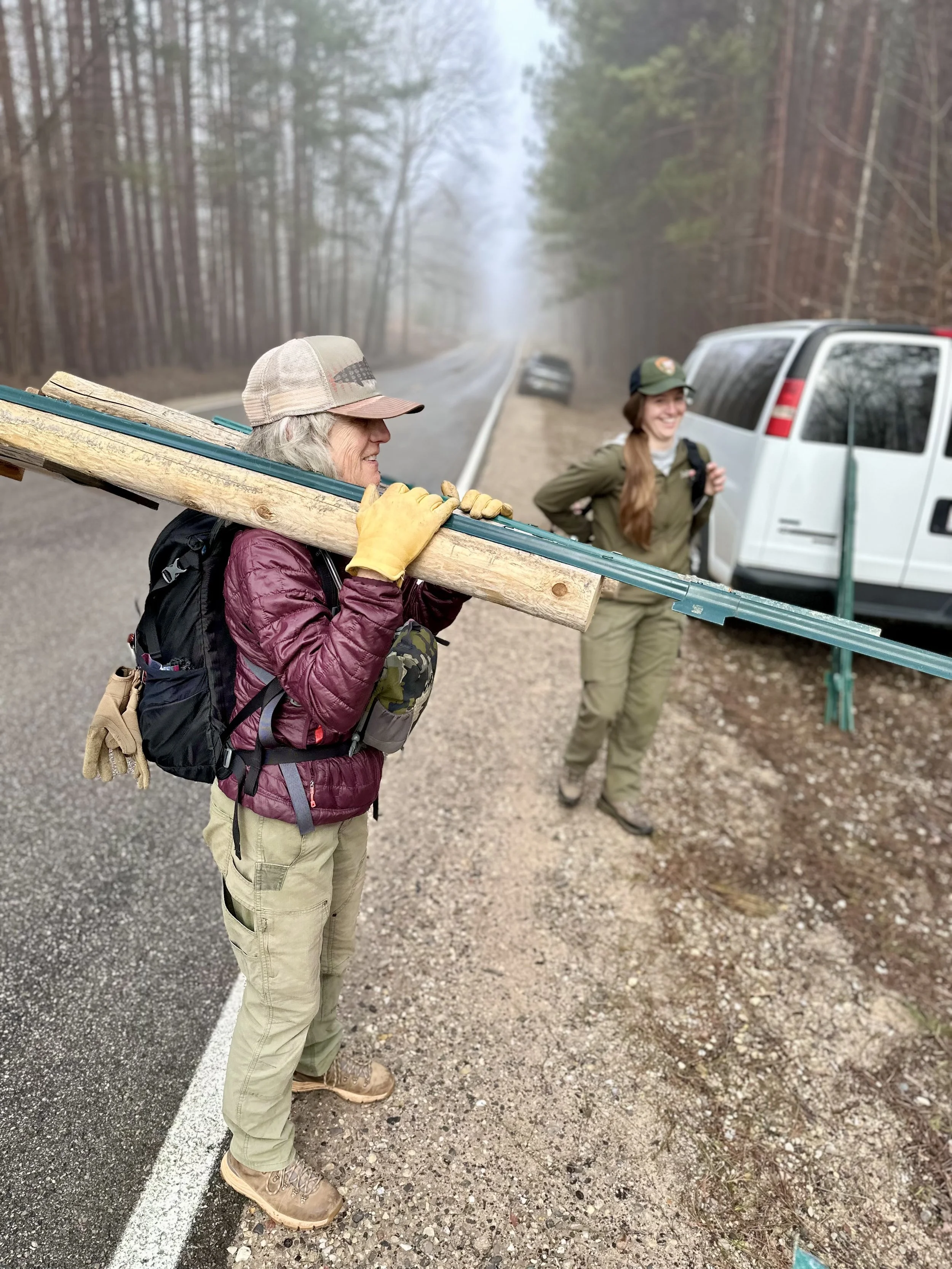
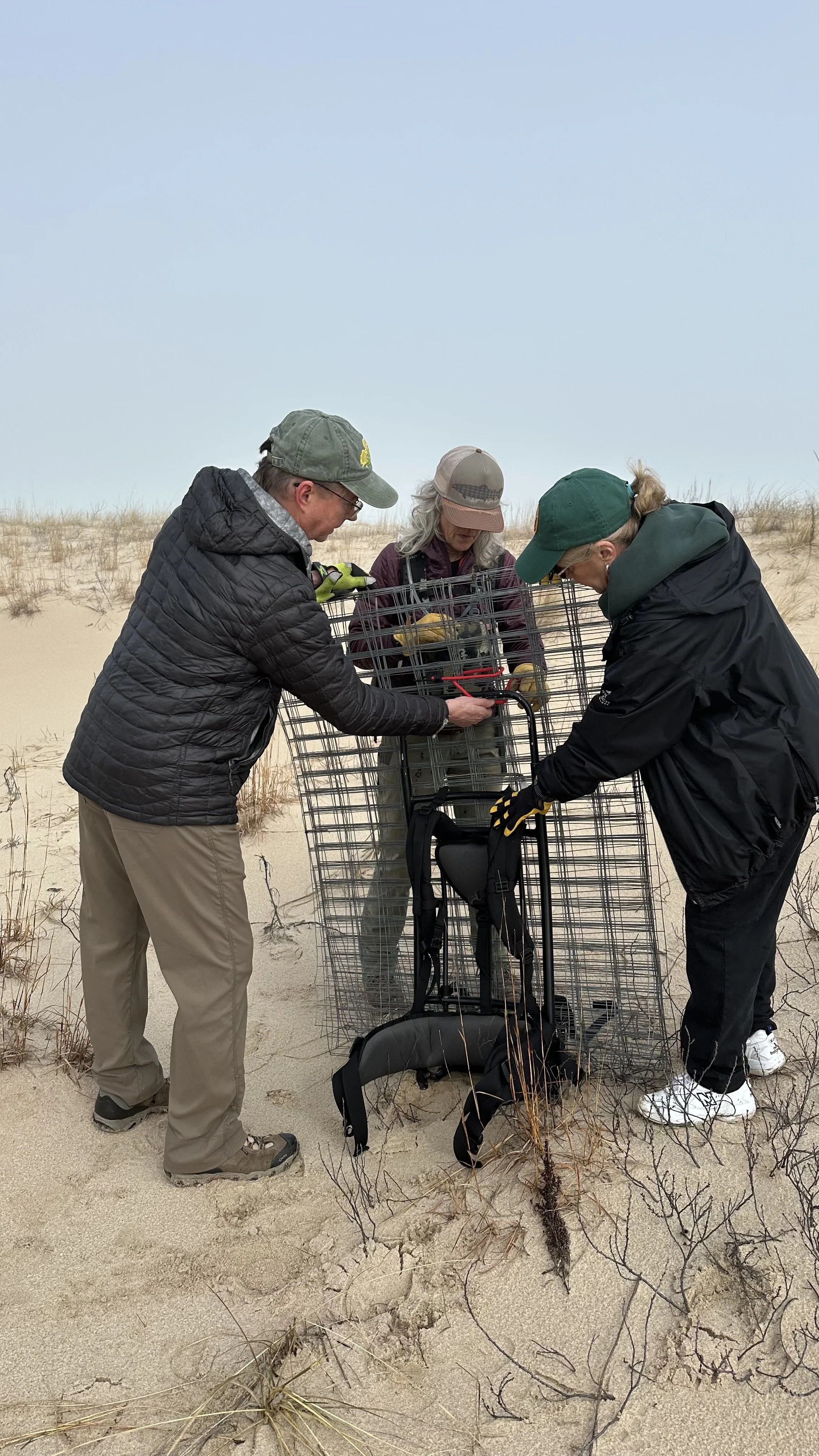
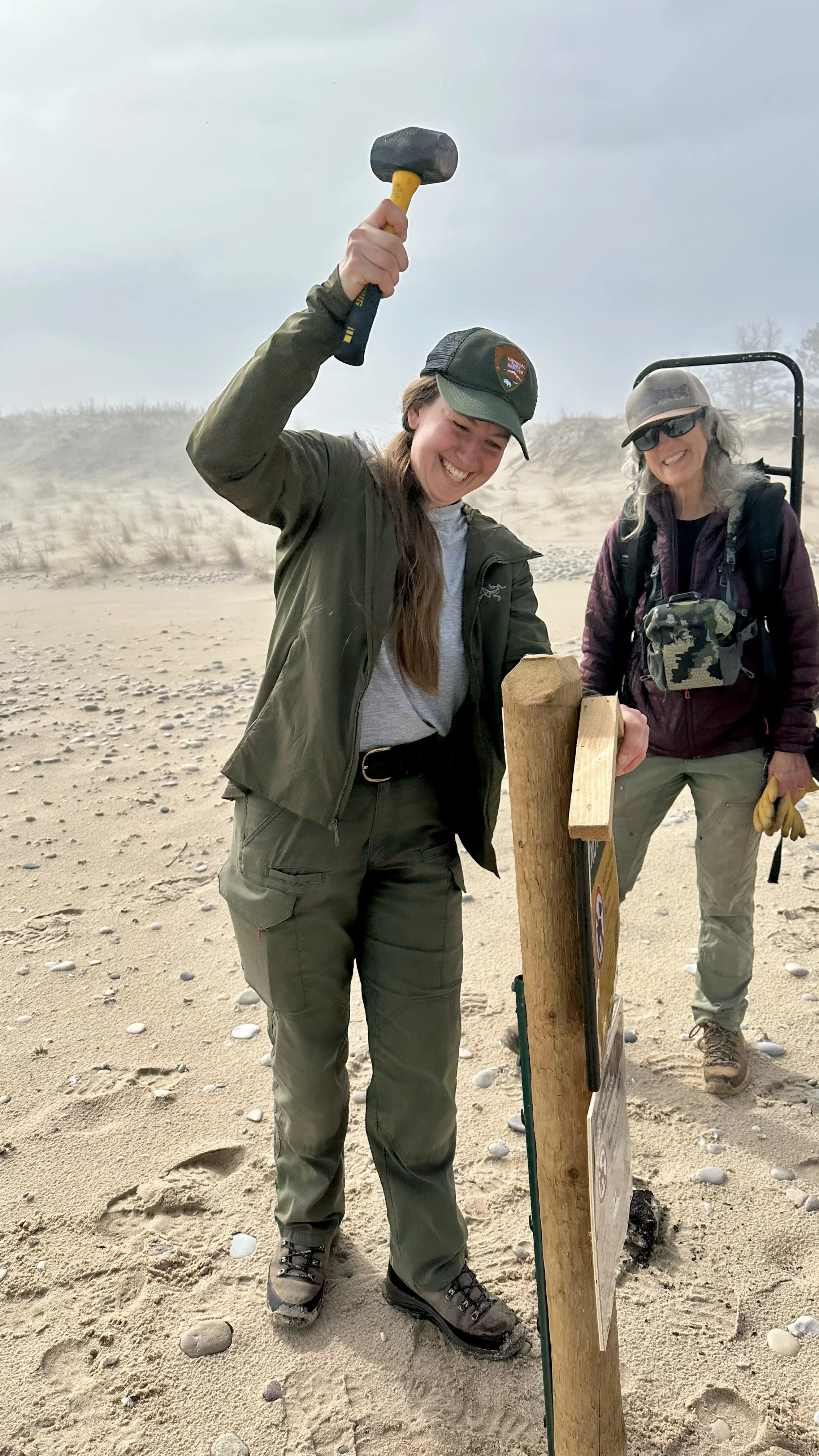
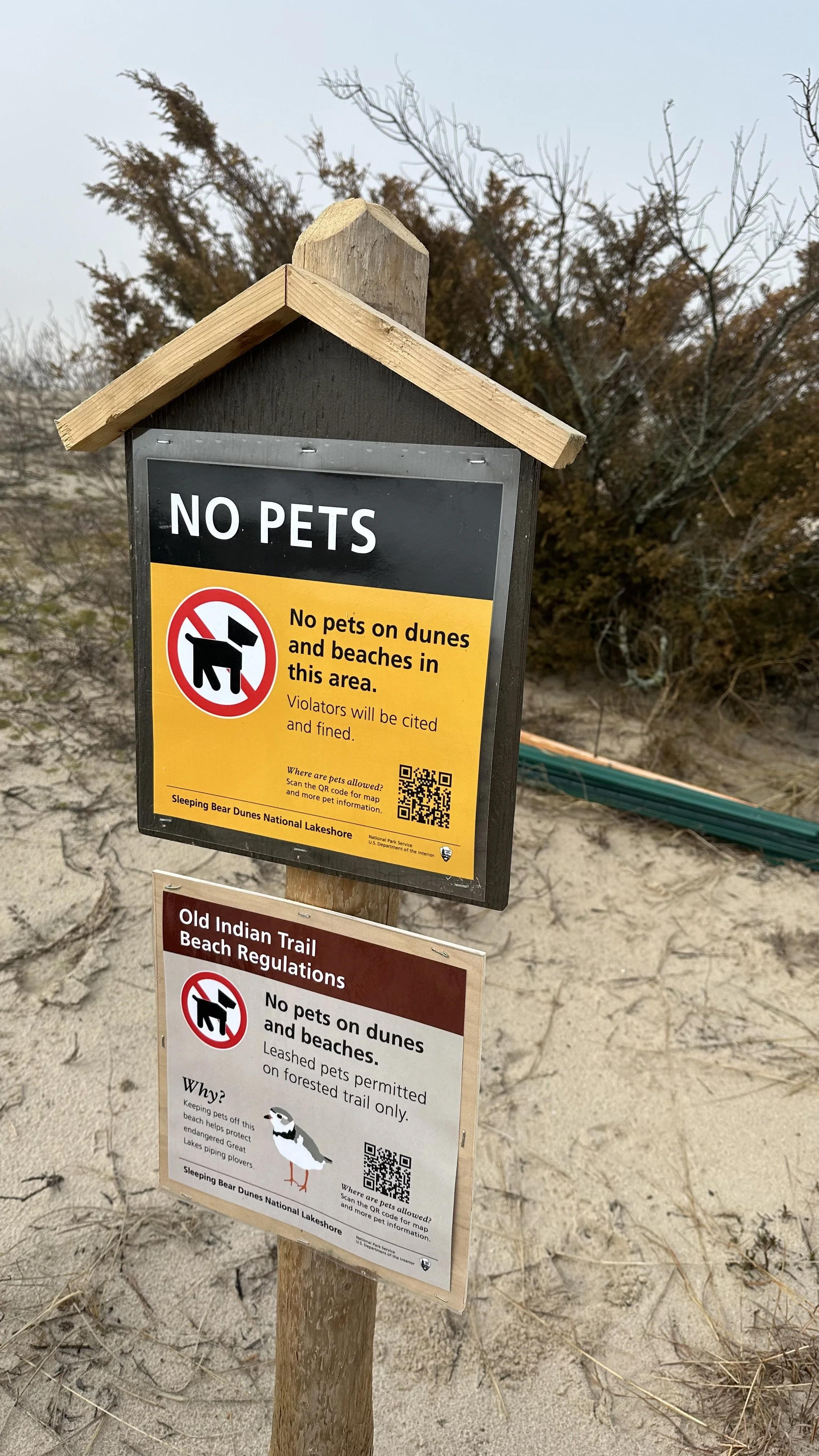
And so we mobilize. Signs, fencing, nest enclosures - carried through forest paths, over ascents of sand and down to pebbled beaches. Ready for another season.
A Lifelong Connection to Nature
I’m a lifelong Michigander, a creative, and a nature lover. I grew up in the Upper Peninsula along the Pictured Rocks National Lakeshore and have always been inspired by and concerned for our natural resources. The seed for this specific volunteer work was planted over 15 years ago on a personal retreat near Cross Village. The themes I kept encountering were in relation to our impact on the environment, and this is when I saw my first beach sign for the endangered Great Lakes Piping Plovers. Fast-forward to the federal funding cuts and hiring freeze in early 2025. I decided to channel my frustration and look into ways to help. Since we had moved to Leelanau County a few years earlier, with the park practically in our backyard, the Piping Plover Conservation Team was the perfect fit.
What Volunteering Looks Like Day-To-Day
In early spring, when the Piping Plovers start arriving, the park service just needs extra hands to get fencing, nest enclosures, and signs out to remote areas and set them up. All you need is a good pair of gloves and stamina. After that, it is a matter of monitoring beaches. All Great Lakes Piping Plovers are banded on their legs, which makes identifying them as simple as learning and understanding how to read and report those bands.
The time commitment is whatever you can do and varies by beach length. On the days I volunteer, which is at least two times a week, I head out in the orange volunteer vest, with a good pair of binoculars and a hip pack with water, snacks, and sunblock. I’ve learned that a pair of nitrile gloves can come in handy because you never know what you’ll encounter on the beach. My job is to observe the plovers and note location, identify banding and any nesting behavior and activity. I also watch for disruptions to the nesting area and educate park visitors on anything plover-related, from questions about fencing locations to rules about pets. All of that gets entered online when I get back home.
Memorable Moments in the Field
The Dune Plateau hike leads to the Dune Climb Trail and needs to be monitored for birds and possible nests. That hike is always stunning, and I get to see the park in all kinds of weather. It is an 8-mile round trip, so I try to get out as early as possible, which means seeing loads of other wildlife: eagles, foxes, coyotes, and deer.
However, I would have to say the best part is when chicks hatch! I’ll never forget the day in mid-June of 2025 when I arrived at the Dune Climb nest and was greeted by four of Yell’s chicks (banding for Yell is YLL – yellow, black, black) racing through the dune grass at the back of the enclosure.
Endless Rewards and Impact
It’s hard to pick just one reward from volunteering. Education, increased awareness, stewardship, a sense of place and purpose, meeting people, creative fuel, insight, blue therapy, cute fuzzy birds; it is all-encompassing for me.
I’ve only been volunteering a year, but the trends and statistics show that this program is having a definitive positive impact on the Great Lakes Piping Plover population. You can check out the numbers at https://www.greatlakespipingplover.org/population-status
How to Get Involved and Support Piping Plover Conservation
If you have the capacity and desire to get out there and get involved, go for it! If long beach hikes aren't for you but you enjoy educating people, there are opportunities to man tables at nesting areas and provide information to beachgoers. You can find out more by visiting this website: https://www.greatlakespipingplover.org/get-involved.
Sometimes I do double duty picking up trash for Friends, too. So, there are many ways to get involved at Sleeping Bear Dunes National Lakeshore depending on your interests.
In general, environmental efforts are facing crisis, with cuts to many essential programs. This makes it crucial for those who can provide financial assistance to do so! The Great Lakes Piping Plover breeding area covers Michigan, Wisconsin, Illinois, Ohio, New York, Pennsylvania and Ontario. Donations help provide the best equipment, education, protection, and other much-needed resources for these birds. Your contribution is 100% tax deductible.
https://www.greatlakespipingplover.org/get-involved#dataItem-knhtht8k