
A Promising Year for the Piping Plovers
By Amy Orzel
20 year population increase record!
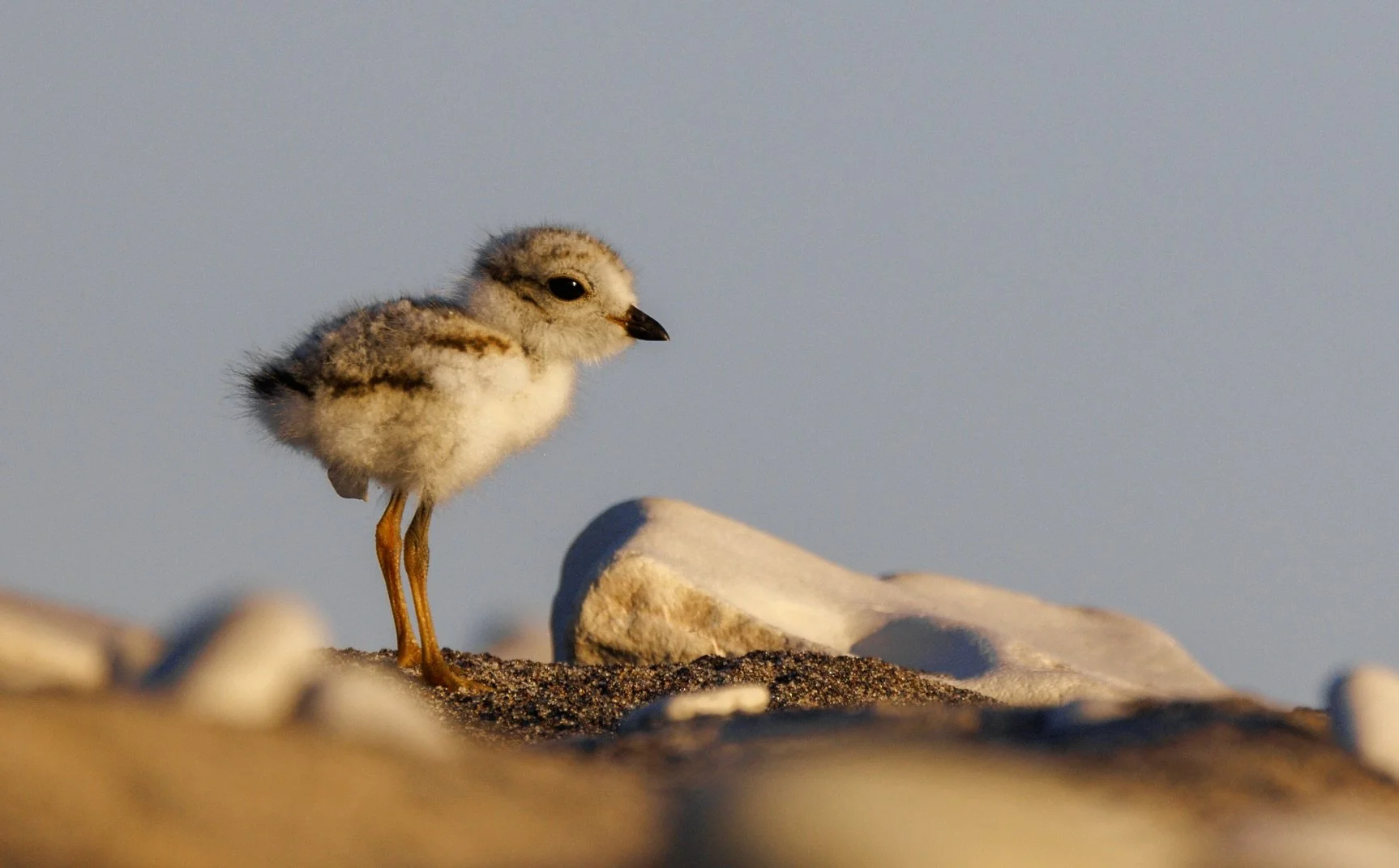
60 chicks fully fledged
When you’re working to protect the piping plovers, every nest, chick, and fledgling matters. Across the Great Lakes, these endangered shorebirds are making exciting progress toward population recovery. Much of that progress is thanks to dedicated conservation work at Sleeping Bear Dunes.
Vince Cavalieri, Wildlife Biologist at Sleeping Bear Dunes National Lakeshore, describes 2026 as “a great year” for the plovers. 99 piping plover pairs established 101 nests in the Great Lakes in 2026, up from 88 pairs in 2025. That’s the largest year-to-year increase in more than 20 years! The progress is remarkable considering that there were only 17 breeding pairs when the Great Lakes piping plover was listed as endangered in 1986.
Sleeping Bear Dunes played a key role in this season’s success. Its shoreline was home to about one-third of all Great Lakes piping plover pairs in 2026, with 32 pairs establishing 33 nests at the Lakeshore. Together, they laid 129 eggs, and 111 hatched in the wild.
From those nests, 60 chicks successfully fledged in the wild, with another four chicks fledging through the captive-rearing program.
Every Nest Matters
Piping plovers depend on healthy beaches, protected nesting areas, careful monitoring, and dedicated people working throughout the nesting season to give them the best possible chance of surviving and raising young. At Sleeping Bear Dunes, conservation scientists from the National Park Service and volunteers from the Friends of Sleeping Bear Dunes monitor piping plover nests, protect nesting areas, and educate the public on how to responsibly share the shoreline with these birds.
The numbers from 2026 show what’s possible, but conservation progress isn’t the same as conservation complete.
The recovery goal for the Great Lakes population is 150 pairs sustained for five consecutive years, along with an average of 1.5 chicks fledged per pair over time. With 99 pairs this year, the population is moving in the right direction, but there’s still important work ahead.
Help Keep the Momentum Going!
Your support helps protect the park's wildlife and habitat, monitor the piping plovers, and provide conservation teams with the resources they need to best support these endangered birds.
A successful nesting season isn't just a number. It is 60 tiny wild-born piping plover chicks taking their very first flights. It is healthy beaches providing safe places for the birds to nest. It is decades of conservation work and hundreds of volunteer hours beginning to show results.
The piping plover's recovery could be a one-of-a-kind success story at Sleeping Bear Dunes. With your support, we can help keep this wonderful momentum going!
Help fund the support and equipment that Friends of Sleeping Bear Dunes Wildlife and Habitat Protection Program needs by donating today.