
Invasive Species: The Plants Hiding in Plain Sight
By Japhet Hoff
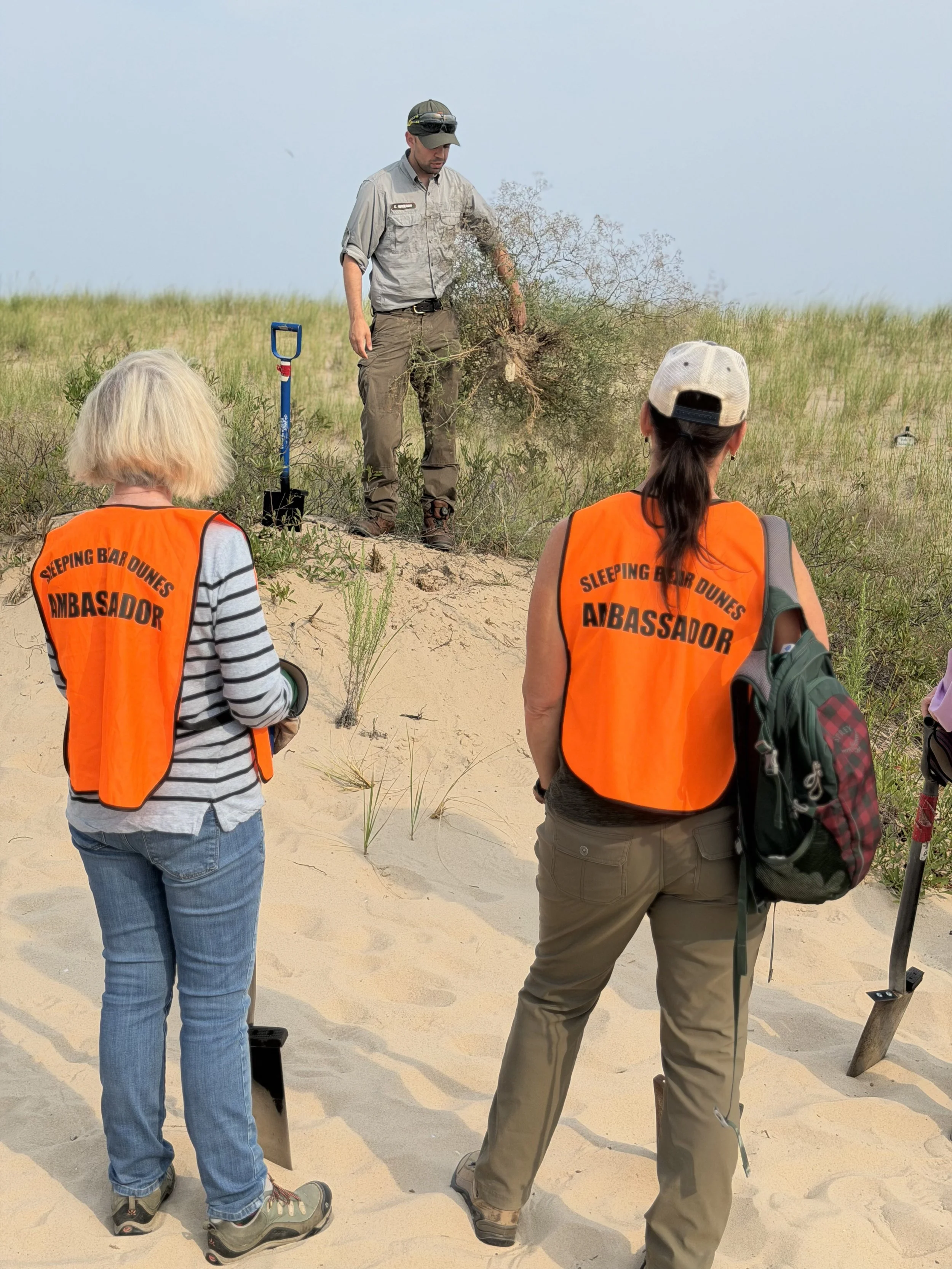
A Park Ranger showing volunteers how to properly remove Baby’s Breath.
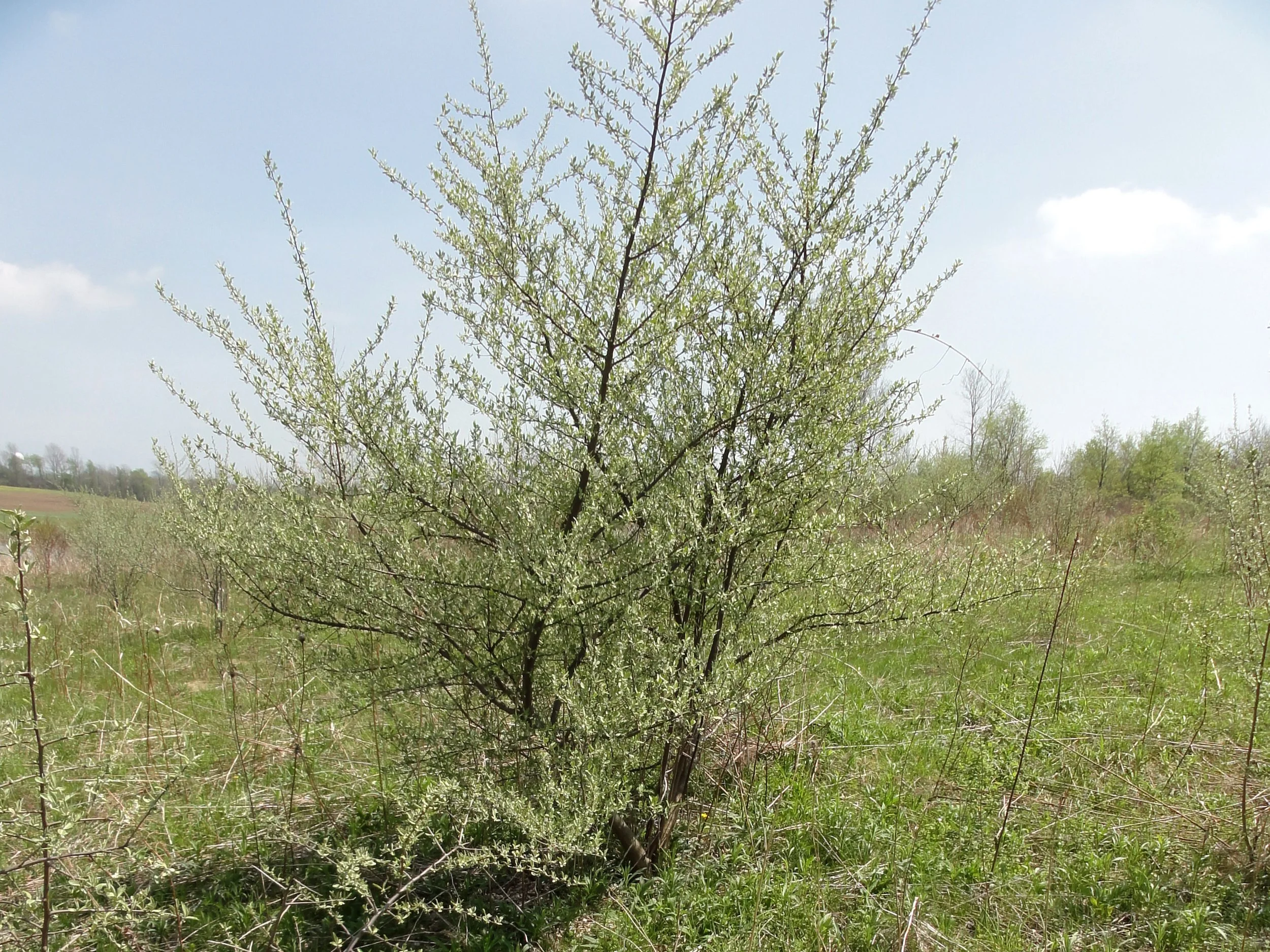
Autumn Olive, an invasive bush often found in fields and roadsides in the Park.
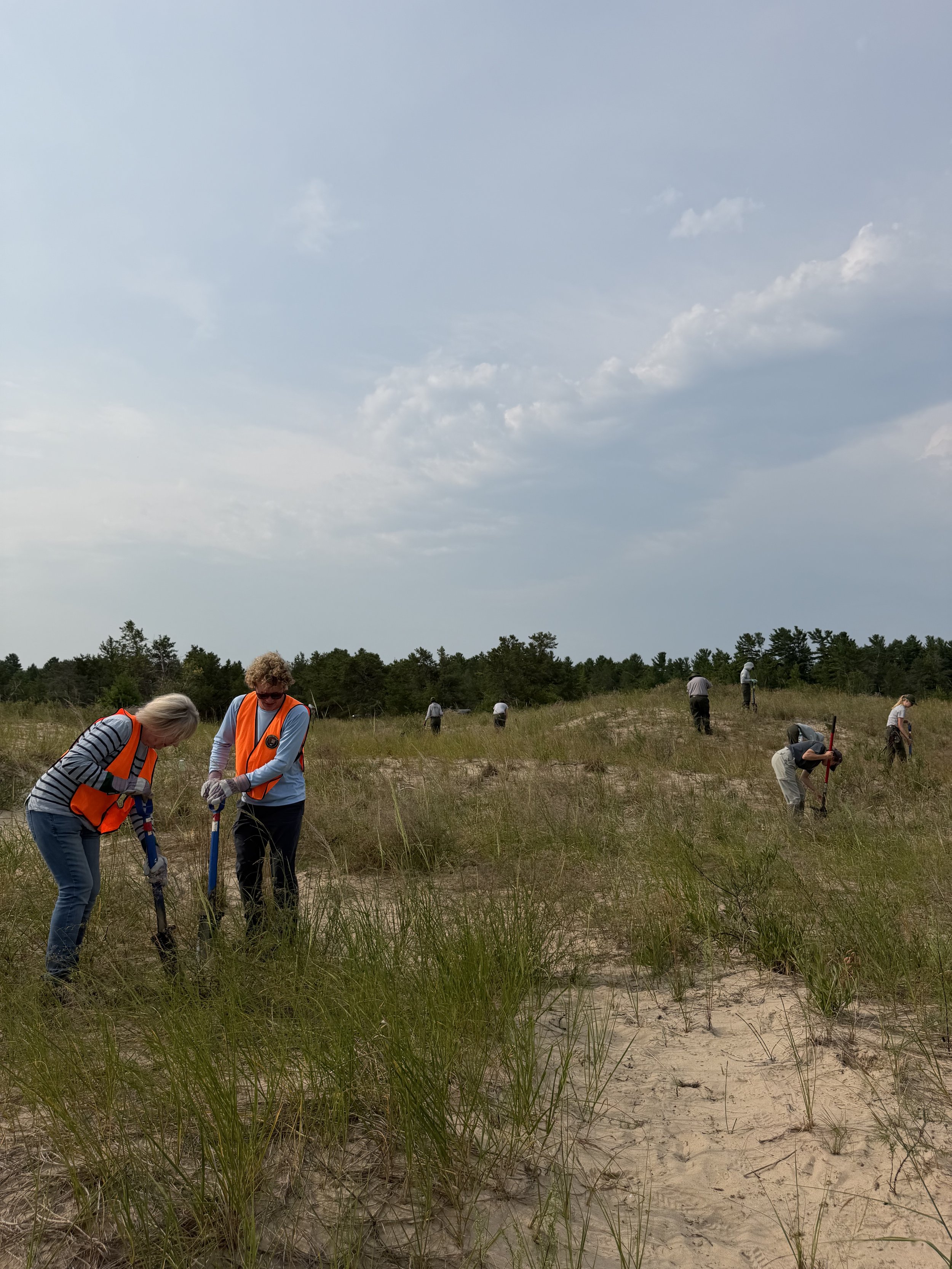
Volunteers working to remove Baby’s Breath at Tiesma Beach
In a place like Sleeping Bear Dunes, every plant has a role to play. The Park's dunes, forests, wetlands, and shorelines support an incredible variety of native plants, many of which have adapted to very specific conditions over thousands of years. When invasive plants are introduced, they can disrupt these ecosystems by competing with native species for space, light, water, and nutrients.
Managing invasive species is an important part of protecting the ecosystems that make Sleeping Bear Dunes so special. But for many of us, it can be difficult to know what that work actually looks like or how we can help.
That's what made our two invasive species events in late July so exciting.
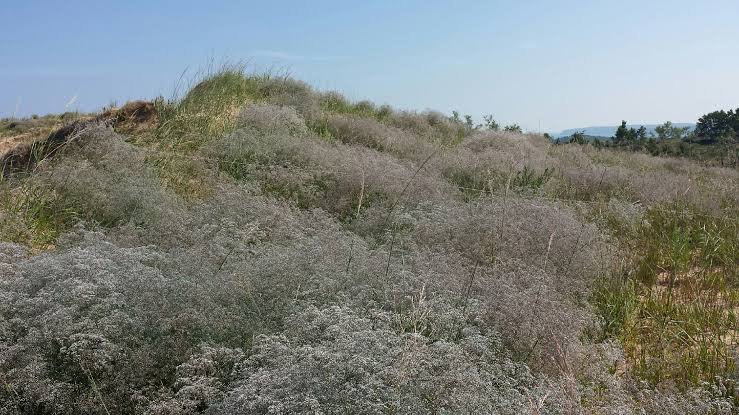
Baby’s Breath, an invasive plant found throughout Sleeping Bear Dunes.
People showed up for all sorts of reasons. Some had invasive plants growing in their own yards and wanted to better understand what they were dealing with. Others had backgrounds in botany and wanted to learn more about the plants found in the Park. Some were simply curious and eager to learn something new.
The first event was our Introduction to Invasive Species Workshop on July 23. Friends of Sleeping Bear Dunes partnered with the Park's invasive species crew and the Northwestern Michigan Invasive Species Network to give people a closer look at the work that goes into managing invasive plants throughout the Park.
We focused primarily on autumn olive, learning how to identify it, why it can be a problem, and how invasive species are managed both in the Park and at home. Participants also had the chance to see and try some of the tools used by the Park's invasive species crew and ask questions.
One of the best parts of the morning was watching the Park's invasive species crew share their knowledge with a group of people who were genuinely excited to learn. The crew took time away from their own fieldwork to explain what they do, answer questions, and share some of the stories they've picked up along the way. Their enthusiasm for the work was contagious, and there were more than a few hilarious stories mixed in with the lessons. It was a great reminder of just how much knowledge and passion goes into caring for the Park.
The Northwestern Michigan Invasive Species Network was also there to share their knowledge and connect participants with additional resources. Having NWMISN, Park staff, Friends, and community members all in the same place made for a great morning of learning and conversation.
Four days later, we put some of that learning into practice.
On July 27, volunteers met at Tiesma Beach for a Baby's Breath Workbee with the Park's invasive species crew. After a quick lesson on how to identify and properly remove baby's breath, we spread out across the dunes and got to work.
The process was pretty simple: find the plant, dig down through the sand until you reach the tap root, and pull the whole thing out. Of course, doing that for two hours is a little more work than it sounds.
What made this Workbee so impactful was the area we were clearing. Tiesma Beach is an important habitat for Pitcher's thistle, a native plant that grows in the Great Lakes dunes and is federally listed as threatened. Pitcher's thistle depends on open, sandy dune habitat to survive, and invasive baby's breath can compete with native plants and alter that environment. Removing baby's breath helps protect the habitat that Pitcher's thistle and other native plants depend on.
Around 20 volunteers spent two hours digging and pulling baby's breath from the dunes, clearing over 2 acres of lakeshore.
What I loved most about these events was the sense of community that grew out of them. People who arrived with different experiences and different reasons for being there ended up learning from one another, working alongside one another, and sharing in the satisfaction of leaving a piece of the Park better than they found it.
That's what I think stewardship is really about. It's not just knowing which plants belong here or knowing how to remove the ones that don't. It's caring enough to learn, caring enough to help, and finding other people who care just as much. Seeing that come together over these two events was a pretty special reminder of how many people are willing to show up for Sleeping Bear Dunes and help protect the little things that make this big place so extraordinary.
I'm excited to see where we can take this work and how these early events might grow into something bigger. With so much interest from the community, I’m looking forward to exploring what an invasive species program could look like for Friends and seeing how we can continue giving people meaningful ways to care for the Park.
Help us grow our volunteer invasive species program and create more opportunities for people to learn, get involved, and protect Sleeping Bear Dunes’ native plants and habitats. Your gift can help bring more volunteers together for impactful events like these. Donate today!